



Look, we've all been there. You start a business doing something you're brilliant at, whether that's web design, selling handmade candles, or consulting, and suddenly you're also expected to be an accountant. Spoiler alert: most of us aren't.
The good news? Most bookkeeping mistakes aren't the end of the world. The bad news? They're costing you actual money, sometimes thousands, and you might not even realise it until HMRC comes knocking or your cash flow dries up at the worst possible moment.
After working with hundreds of small businesses across Sussex (and yes, a few cups of coffee in sunny Worthing), we've seen the same seven mistakes crop up again and again. Let's walk through them, shall we?
1. The "It's Just One Coffee" Trap: Mixing Personal and Business Finances
Here's how it starts: you're out grabbing lunch and you think, "I'll just use the business card: I was thinking about work anyway." Then it's a few groceries. Then it's your Netflix subscription "because you sometimes watch business documentaries."
Before you know it, your business account looks like a chaotic diary of your entire life, and good luck figuring out what's actually deductible come tax time.
Why it matters: When personal and business transactions are tangled together, you can't accurately see what your business is actually earning. Plus, if you're ever audited (and nobody wants that), you'll spend hours trying to justify why your gym membership counts as a business expense. (Hint: it doesn't, even if you network there.)
The fix:
- Keep separate bank accounts: no exceptions, no "just this once"
- Pay yourself a proper salary or draw, then spend that money however you like
- If you absolutely must use business funds for something personal, record it as an owner's draw immediately

2. The Receipt Graveyard: Losing Track of Invoices and Receipts
Remember that time you bought a new laptop for work and stuffed the receipt in your wallet? Where is it now? Exactly.
In 2026, there's literally no excuse for losing receipts. We've all got smartphones with cameras better than most DSLRs from ten years ago. Yet somehow, come tax time, we're all rummaging through glove compartments and old jacket pockets looking for proof we bought that £800 software licence.
Why it matters: No receipt = no deduction in HMRC's eyes. Even if you genuinely spent the money on legitimate business expenses, you could lose thousands in potential tax relief. Plus, trying to reconstruct your spending from memory six months later is about as accurate as predicting the weather in Britain: occasionally right, mostly wishful thinking.
The fix:
- Snap a photo of every receipt immediately and store it in a cloud folder (Dropbox, Google Drive, whatever works)
- Use apps like Dext or Receipt Bank that integrate with your accounting software
- Set up digital invoicing so you always have a paper trail
- Create a monthly ritual of reviewing and filing all documentation
3. Bank Reconciliation? More Like Bank Procrastination
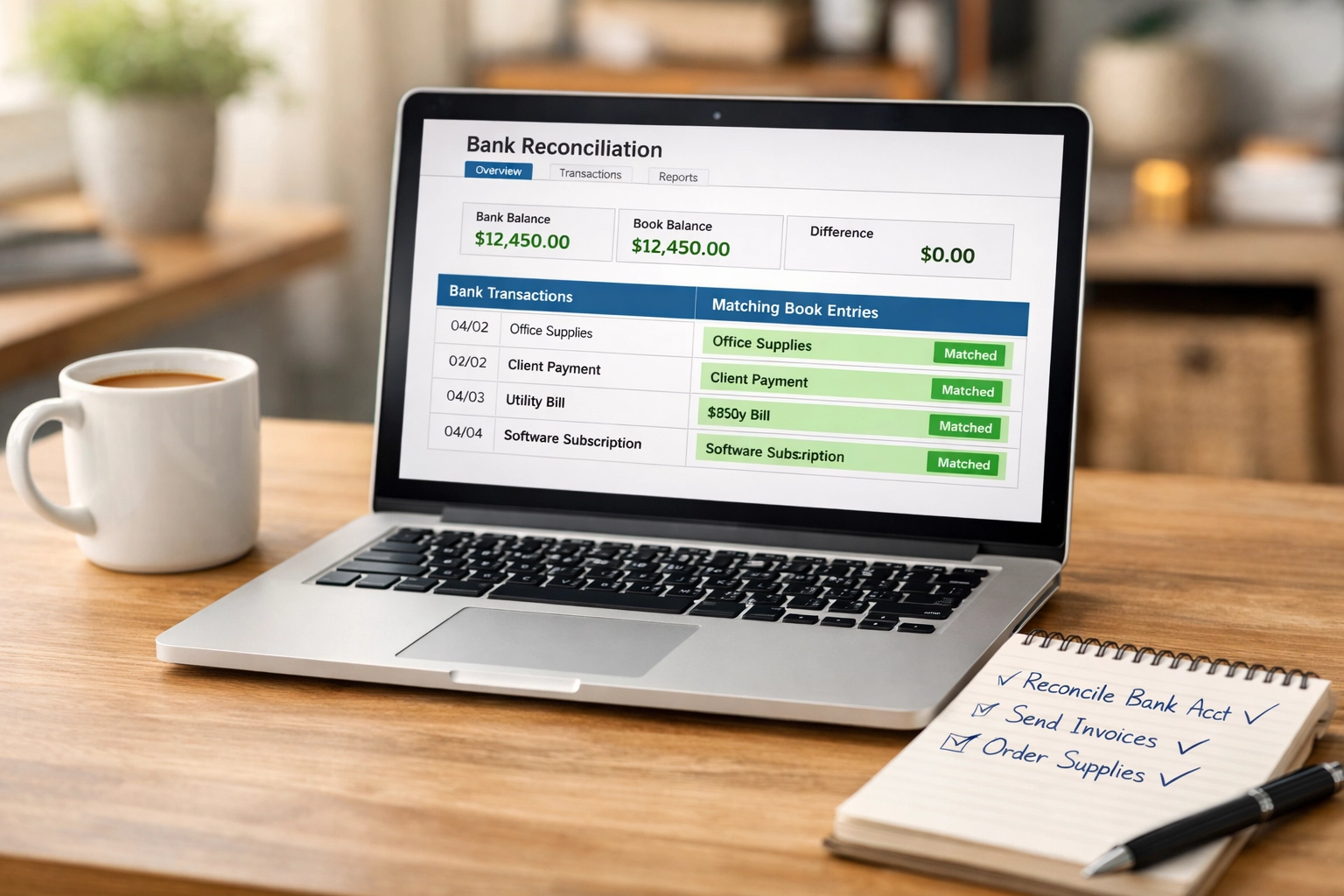
If you're only checking whether your books match your bank statement once a year (or, let's be honest, never), you're flying blind. It's like driving while checking your fuel gauge once a month: by the time you notice a problem, you're already broken down on the M23.
Why it matters: Weekly bank reconciliation isn't about being a control freak: it's about catching problems while they're still fixable. Duplicate payments, mystery charges, invoices you thought were paid but weren't: all of these mess with your cash flow management. And in a small business, cash flow is king. You can be profitable on paper and still go bust if you run out of actual money.
The fix:
- Set aside 30 minutes every Friday (or Monday, pick your poison) to reconcile
- Use cloud accounting software like Xero or QuickBooks that connects to your bank feed
- Investigate anything that doesn't match immediately, not six months later
- Track uncleared items older than 60 days: they're usually errors or forgotten transactions

4. VAT Vexation: Getting Your Claims Wrong
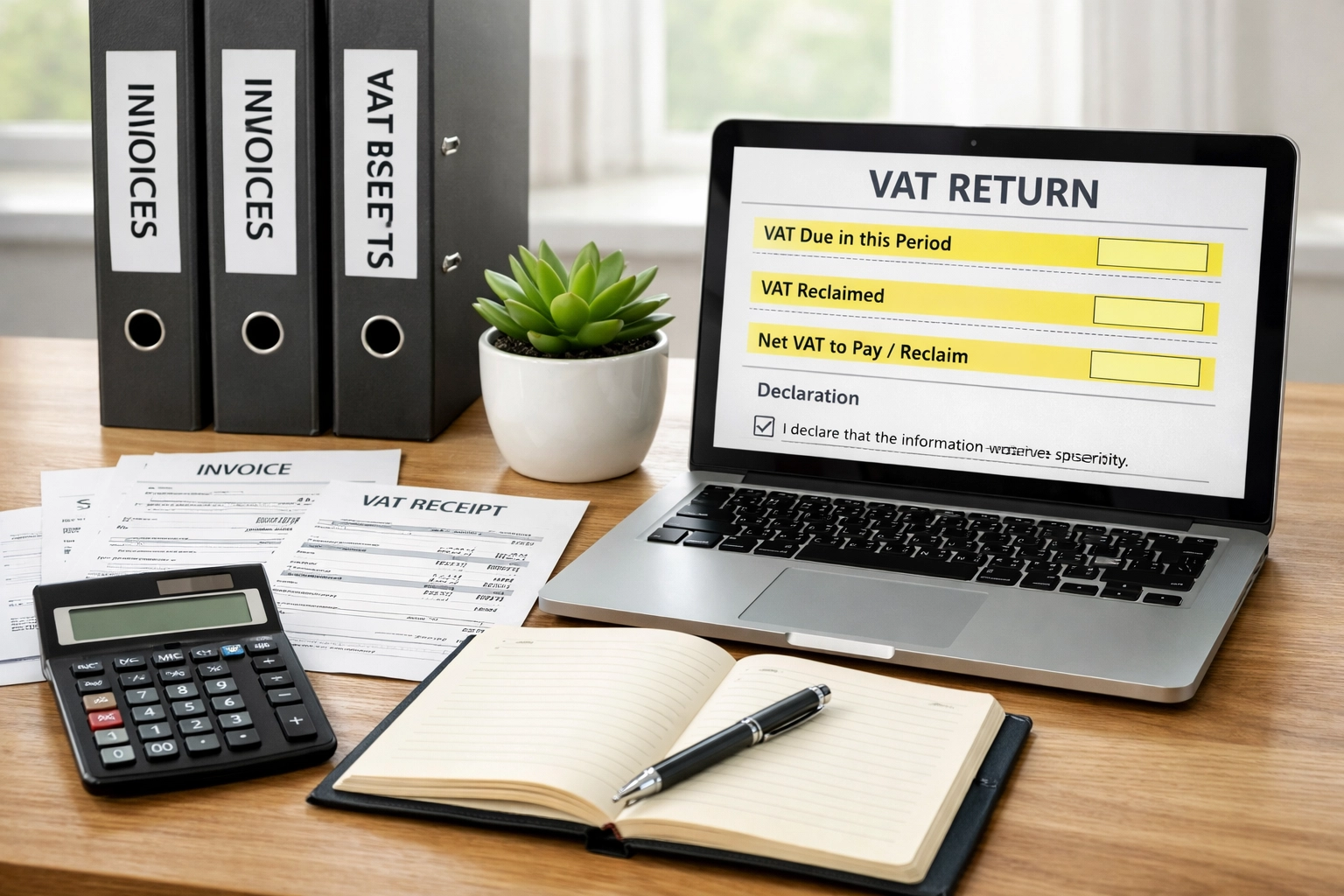
VAT is like that board game where everyone thinks they know the rules until someone actually reads the instructions. Can you claim VAT on that coffee with a client? What about the business portion of your mobile phone? And don't even get us started on the flat rate scheme versus standard VAT.
Why it matters: Claiming VAT you're not entitled to can trigger penalties and interest charges. Missing out on legitimate VAT deductions means you're literally giving HMRC money you could have kept. Either way, you lose.
The fix:
- Understand what's genuinely claimable (HMRC's website is surprisingly helpful, or just ask an actual bookkeeper)
- Keep detailed records of what you're claiming and why
- If you're on the flat rate scheme, make sure you actually understand how it works
- Don't guess: VAT rules are weirdly specific and actually matter
5. The "They'll Pay Eventually" Delusion: Ignoring Credit Control
You did the work. You sent the invoice. Now you're waiting. And waiting. And… 60 days later, you're still waiting while your own bills are piling up.
Here's the thing about credit control: being nice doesn't pay the rent. If you're letting clients consistently pay 60+ days late (or not at all), you're essentially running a free bank for other businesses.
Why it matters: Late payments are the silent killer of small businesses across the UK. You can be technically profitable while still struggling to make payroll because all your money is stuck in unpaid invoices. It's like being asset-rich and cash-poor, except it's not fun and you can't eat assets.
The fix:
- Send invoices immediately: not "when you get around to it"
- Follow up at 7 days, 14 days, and 30 days without fail
- Include payment terms on every invoice (and actually enforce them)
- Consider sales ledger management support if chasing payments isn't your strong suit (it rarely is for creative or technical people)
- Build late payment fees into your terms: and actually charge them
6. Making Tax Digital: The 2026 Wake-Up Call
If "Making Tax Digital" sounds like something you'll worry about later, we have news: later is now. The MTD rules for Income Tax Self Assessment are rolling out in 2026, and HMRC isn't known for its flexibility with deadlines.
Why it matters: If you're still tracking income on spreadsheets or (heaven forbid) in notebooks, you're going to face a rude awakening. MTD requires digital record-keeping and quarterly submissions. Getting this wrong means penalties, and nobody has budget for that.
The fix:
- Switch to MTD-compliant accounting software now (Xero, QuickBooks Online, Sage, FreeAgent all work)
- Make sure your bookkeeper or accountant is up to speed with the requirements
- Start filing quarterly submissions even if you're not required yet: practice makes perfect
- Don't leave this until the week before your first deadline (we've seen that panic before)
7. The "I Can Do It Myself" Tax: Your Time vs. Your Money
Here's a bit of shameless honesty: you probably can do your own bookkeeping. Just like you can rewire your own house or represent yourself in court. The question isn't can you: it's should you?
If you're spending 10 hours a month wrestling with bookkeeping mistakes, reconciliation, and VAT returns, that's 10 hours you're not spending on actual revenue-generating work. For most business owners, that time is worth significantly more than the cost of outsourced bookkeeping.
Why it matters: Opportunity cost is real. Every hour you spend deciphering confusing reports or hunting down receipts is an hour you're not making sales, serving clients, or developing your business. Plus: and let's be honest here: you probably hate doing it anyway.
The fix:
- Calculate what your time is actually worth (billable rate × hours spent on bookkeeping)
- Compare that to the cost of outsourcing to professionals who do this stuff all day
- Consider that an outsourced team means no sick days, no holidays, no training: just consistent, expert support
- Remember that good bookkeeping actually saves you money through better tax planning and cash flow management
The Bottom Line (See What We Did There?)
None of these mistakes are fatal on their own, but they add up. A few missed receipts here, some late payments there, a bit of VAT confusion: suddenly you're haemorrhaging money without quite knowing where it's going.
The good news? Every single one of these is fixable, and the sooner you address them, the less they cost you.
Whether you're a sole trader in Worthing trying to keep your head above water, or a growing business in Sussex that's outgrown the "spreadsheet and hope" method, getting your bookkeeping sorted isn't just about compliance: it's about actually understanding where your money's going and making better decisions because of it.
Want to know which of these mistakes might be costing your business? Book a 15-minute Back-Office Health Check: we'll have a no-pressure chat about what's working, what isn't, and what you might be leaving on the table. No sales pitch, just honest advice from people who've seen it all before.
Because at the end of the day, bookkeeping shouldn't be the thing that keeps you up at night. That's what the actual running-your-business stress is for.